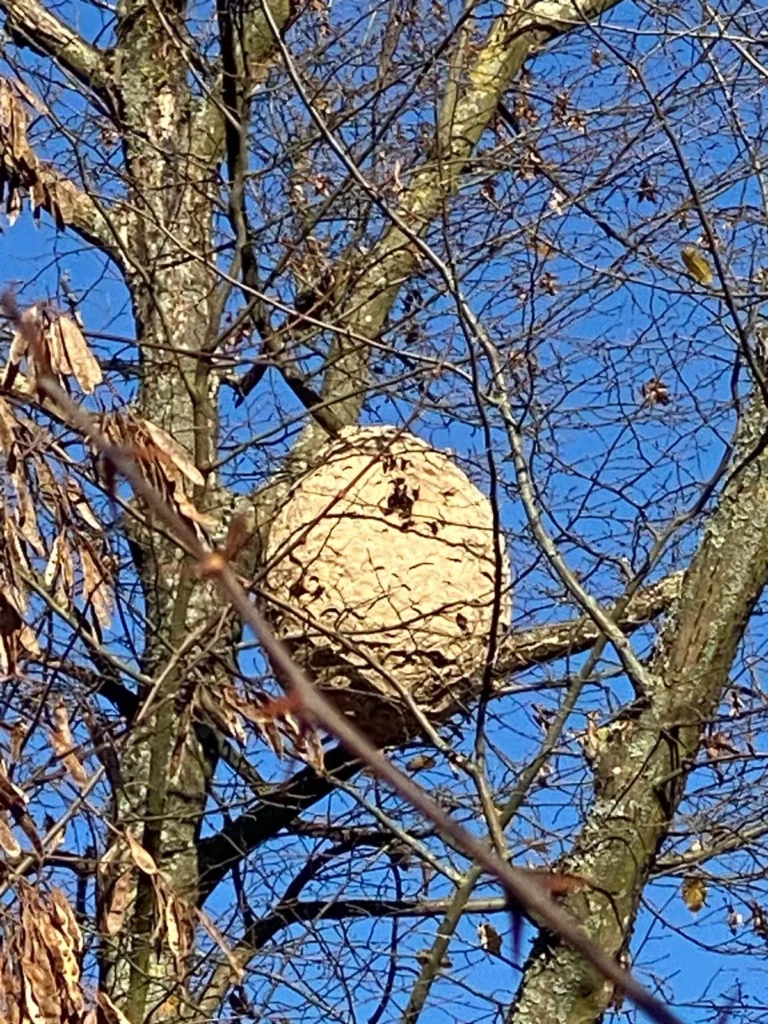
How I can help assess your situation
For an initial assessment, it helps to know where the nest is, what is happening and, if they can be taken from a safe distance, to have photographs. Please also tell me your town or village and whether people regularly pass through the insects’ flight path.
You can discuss a possible nest relocation with me. We clarify individually whether a visit is useful and possible. Any permits required are obtained before work is carried out on the nest.
Why wasps and hornets matter
Wasps and hornets are part of our native wildlife. They catch other insects to feed their young and form part of the natural food web. Hornets, for example, also catch flies, mosquitoes and caterpillars.
A nest near your home does not automatically need to be removed. In many cases, respecting the insects’ flight paths and the area around the nest makes coexistence possible.
Found a nest? Stay calm and keep your distance
- Keep your distance from the nest and leave the entrance and flight path clear.
- Do not disturb or shake the nest, and do not block its entrances.
- Do not attempt to remove, smoke out or spray a nest yourself.
- Only take photographs from a safe distance. Getting advice matters more than getting a close-up picture.
Species protection and permits
Native European hornets are specially protected. Relocating or removing their nests generally requires prior authorisation from the relevant nature conservation authority.
Wasps are also protected. Common species such as the German wasp and common wasp are covered by general protection: insects and their nests must not be harmed without reasonable justification. The requirements differ depending on the species.
An expert assessment helps identify the species and clarify the appropriate next steps with the relevant authority.
Asian hornet: identify and report
The Asian hornet (Vespa velutina) is an invasive species and must be distinguished from the native European hornet (Vespa crabro). Key features include a dark thorax, yellow leg tips and a broad orange band on the abdomen. A single feature or size alone is not enough for reliable identification.
If you suspect an Asian hornet sighting, keep your distance, take a photograph from a safe distance if possible, and report the sighting and location through Bavaria’s official BEEWARNED portal. Do not attempt to catch or control the insects yourself.
Report a sighting to BEEWARNED
Questions about wasps, hornets or a nest?
Contact Bee Life Imkerei. A short description and your location help with the initial assessment.
Call now Contact via WhatsApp
Telephone and WhatsApp: +49 179 2653016
Further information